Cost-effective customized wholesale (1Z,3Z)-Cycloocta-1,3-diene 1700-10-3
- Molecular Formula:C8H12
- Molecular Weight:108.183
- Appearance/Colour:colourless liquid
- Vapor Pressure:4.98mmHg at 25°C
- Melting Point:-53 – -51 °C
- Refractive Index:n20/D 1.494
- Boiling Point:150.1 °C at 760 mmHg
- Flash Point:25.1 °C
- PSA:0.00000
- Density:0.841 g/cm3
- LogP:2.67280
1,3-Cyclooctadiene(Cas 1700-10-3) Usage
|
General Description
|
1,3-Cyclooctadiene, particularly its (Z,Z)-isomer, can undergo enantiodifferentiating photoisomerization to produce chiral (E,Z)-1,3-cyclooctadiene with significant enantiomeric excess (up to 18% ee) when sensitized by chiral aromatic carboxylates, such as (-)-menthyl benzenehexacarboxylate, in nonpolar solvents. The process is highly sensitive to solvent polarity, with polar solvents diminishing enantioselectivity, likely due to radical ionic intermediates. The resulting optically active (E,Z)-isomer exhibits exceptionally high specific rotation and circular dichroism, confirming theoretical predictions about its chiroptical properties. Supramolecular systems, such as γ-cyclodextrin-based rotaxanes, further enhance enantioselectivity (up to 15.3% ee) by providing chiral binding sites for sensitization. |
InChI:InChI=1/C8H12/c1-2-4-6-8-7-5-3-1/h1-4H,5-8H2
1700-10-3 Relevant articles
Enantiodifferentiation in the Photoisomerization of (Z,Z)-1,3-Cyclooctadiene in the Cavity of γ-Cyclodextrin-Curcubit[6]uril-Wheeled [4]Rotaxanes with an Encapsulated Photosensitizer
Yan, Zhiqiang,Huang, Qinfei,Liang, Wenting,Yu, Xingke,Zhou, Dayang,Wu, Wanhua,Chruma, Jason J.,Yang, Cheng
, p. 898 - 901 (2017)
A biphenyl photosensitizer axle was impl...
Optically active (E,Z)-1,3-cyclooctadiene: First enantioselective synthesis through asymmetric photosensitization and chiroptical property
Inoue, Yoshihisa,Tsuneishi, Hiroshi,Hakushi, Tadao,Tai, Akira
, p. 472 - 478 (1997)
Enantiodifferentiating photoisomerizatio...
Resolution, Circular Dichroism Spectrum, Molecular Structure, and Absolute Configuration of cis,trans-1,3-Cyclooctadiene
Isaksson, Roland,Roschester, Jan,Sandstroem, Jan,Wistrand, Lars-Goeran
, p. 4074 - 4075 (1985)
-
Enantiodifferentiating photoisomerization of (Z, Z)-1,3-cyclooctadiene included and sensitized by naphthoyl-curdlan
Fukuhara, Gaku,Imai, Mami,Yang, Cheng,Mori, Tadashi,Inoue, Yoshihisa
supporting information; experimental part, p. 1856 - 1859 (2011/06/22)
6-O-(2-Naphthoyl)curdlan was newly synth...
1700-10-3 Process route
-
-
109-99-9,24979-97-3,77392-70-2
tetrahydrofuran
-
-
3806-59-5
1,3-cyclooctadiene
-
-
5549-09-7
bicyclo[3.3.0]oct-2-ene
-
-
1700-10-3,3806-59-5,3806-60-8,96612-29-2,96612-30-5
cyclooctadienyl anion
-
-
87291-52-9
4-Ethylbicyclo<3.3.0>oct-2-en
Conditions
| Conditions |
Yield |
|
With
[(trimethylsilyl)methyl]potassium;
at 0 ℃;
Mechanism;
Product distribution;
|
|
-
-
79643-79-1
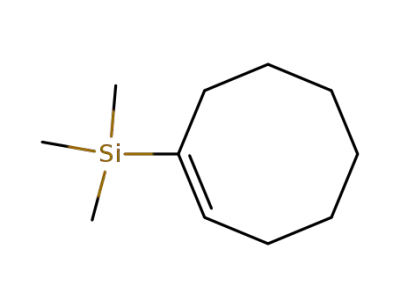
1-trimethylsilyl-cis-cyclo-octene
-
-
1700-10-3
1,3-cyclooctadiene
Conditions
| Conditions |
Yield |
|
Multi-step reaction with 2 steps
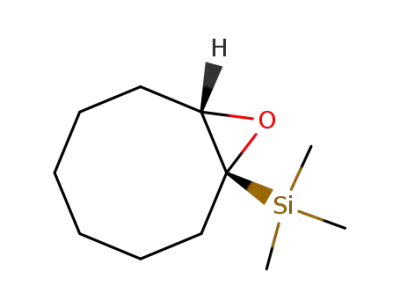
1: 84.7 percent / m-chloroperbenzoic acid, disodium hydrogen phosphate / CH2Cl2 / 1 h
2: conc. H2SO4, MeOH / 0.33 h / 80 °C / 3 and 4 not separated
With
methanol; disodium hydrogenphosphate; sulfuric acid; 3-chloro-benzenecarboperoxoic acid;
In
dichloromethane;
|
|
1700-10-3 Upstream products
1700-10-3 Downstream products






![bicyclo[3.3.0]oct-2-ene](/upload/2026/5/e1d6899f-43b9-49a4-9df7-ac4103d18ef3.png)